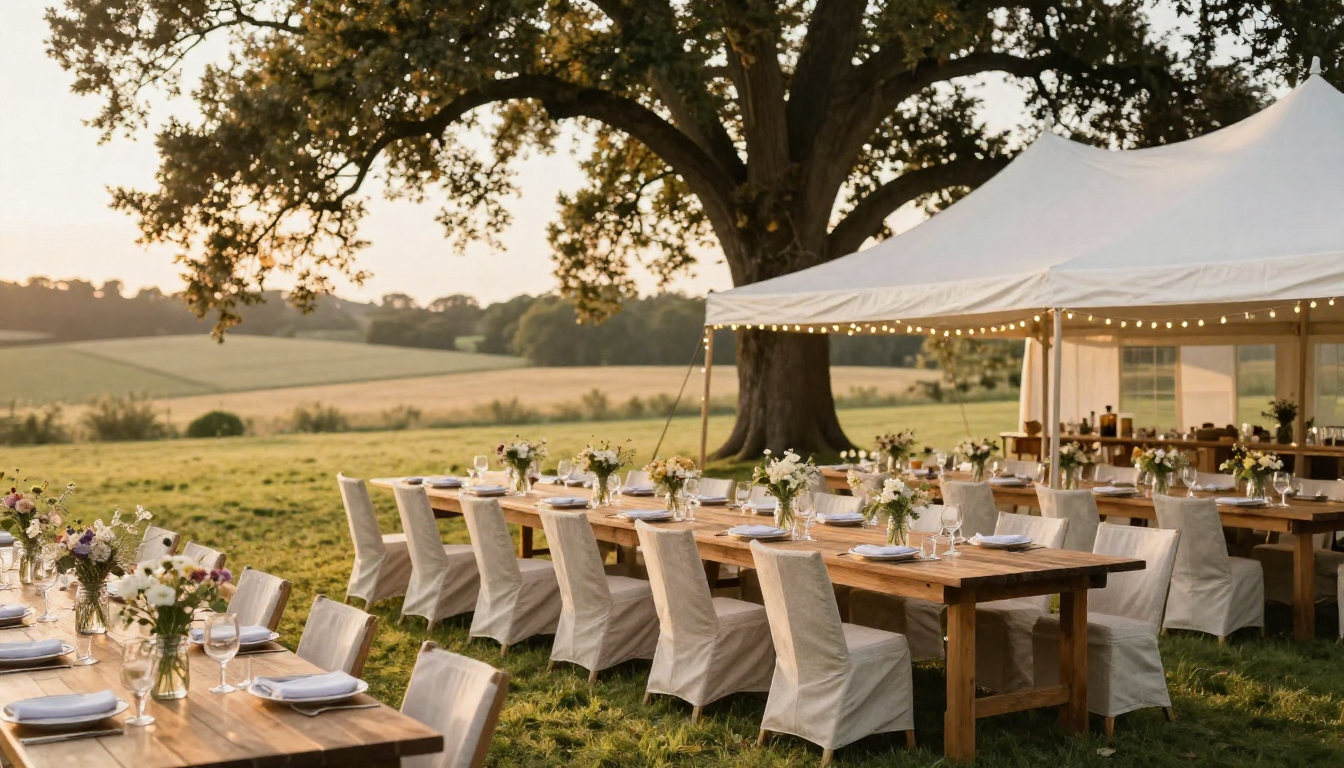
Sunlight filters through the tree canopy, a gentle breeze stirs the tulle decorations, and your “I do” echoes through nature instead of within the walls of a reception hall. An outdoor wedding is a dream for many couples – romantic, unique, full of magic. But before you start searching for the perfect location among meadows and gardens, you should know that an outdoor celebration is a completely different organizational league. What do you need to remember so your dream day doesn’t turn into a logistical nightmare?
Why are outdoor weddings so popular?
The trend for outdoor weddings has been growing year after year. It’s no wonder – photos from such celebrations look absolutely magical, and guests remember them as a unique experience. Instead of a formal banquet hall, you have space, fresh air, and an unparalleled setting. Seriously, it’s hard to resist the vision of exchanging vows under a sprawling oak tree or having your first dance under the stars.
But does this mean outdoor venues are all advantages? Not quite. An open-air wedding requires significantly more planning than a traditional reception in an enclosed space. Weather, logistics, guest comfort – you need to consider all of this from the very first stages of preparation.
Location – the foundation of a successful outdoor wedding
Choosing the right venue is absolutely essential. Not every beautiful meadow is suitable for a wedding, even if it looks stunning in Instagram photos.
What to consider when choosing a location?
- Access to utilities. Electricity, water, restrooms – these aren’t just details, they’re necessities. Check whether the venue has connections or what the costs are for providing them (e.g., generators, portable toilets).
- Guest access. A romantic clearing in the middle of a forest sounds beautiful, but can your grandmother actually get there? Think about parking and possible transportation for guests.
- Permits and formalities. Organizing an event in certain locations requires permission from the property owner, and sometimes even permits from local authorities.
- Plan B. Does the location offer an alternative in case of rain? A tent is one thing, but is there space to set one up?
Popular options include gardens at manor houses and estates, vineyards, agritourism farms with large grounds, as well as private properties belonging to family or friends. Each has its own advantages and challenges.
Weather – your greatest friend or foe
Sounds obvious? Maybe. But underestimating unpredictable weather is a mistake that has cost many couples their peace of mind.
Always, and we mean always, have a backup plan. Even if the forecast a week before the wedding shows clear skies and sunshine, weather can change in a matter of hours. A wedding tent is the absolute minimum – and we’re not talking about a small gazebo, but a solid structure that can accommodate all your guests and protect them from rain, wind, and even heat.
Practical weather tips
- Heat. Provide shade, fans for guests, plenty of cold drinks, and portable fans. Consider moving the ceremony to later hours.
- Rain. A tent with solid side walls, pathways lined with boards or carpet (mud and heels are a tragic combination), umbrellas for guests.
- Wind. Secure decorations, avoid tall unstable elements, inform guests (especially ladies in dresses!).
- Evening chill. Even in summer, evenings can get cold. Blankets for guests, patio heaters, or a bonfire are great solutions.
Guest comfort – don’t forget the basics
It’s easy to focus on aesthetics and your own vision while forgetting about the practical needs of your guests. After all, they’ll be spending many hours at your wedding.
Restrooms. If the location doesn’t have enough bathrooms, invest in elegant portable toilets (yes, they exist and actually look quite nice!). The standard rule is a minimum of one unit per 25-35 guests.
Seating areas. Not just at tables – think about a chill-out zone with comfortable seating where guests can take a break from dancing and conversation.
Guest information. Send detailed information in advance about the location, dress code (definitely mention comfortable footwear!), and what they can expect. Guests who know they’re attending an outdoor wedding will come appropriately prepared.
Photo documentation – how to capture all the memories?
An outdoor wedding is a photographer’s paradise. Natural light, picturesque backdrops, space for creative shots – photos from such a celebration are simply exceptional. But there’s one catch: while the professional photographer focuses on the couple and key moments, guests take hundreds of photos that capture completely different perspectives and spontaneous moments.
The problem? These photos usually get lost in the depths of phones, and promises of “I’ll send it to you on Messenger” rarely come true.
The solution can be a guest photo collection app like PixFiesta. Guests scan a QR code placed on tables or in invitations and can immediately upload their photos to a shared gallery – no login required, no app to install. This is especially useful at an outdoor wedding where guests spread out across the entire venue and take photos in various corners.
Decorations and styling – with nature, not against it
The outdoors is a decoration in itself, so you don’t need to go overboard with additions. Less is more – let the natural surroundings speak for themselves.
Proven ideas for outdoor decorations
- Use nature. Branches, wildflowers, wooden elements blend perfectly with the surroundings.
- Lighting is key. String lights, lanterns, candles in jars – they create a magical atmosphere in the evening.
- Stability. All decorations must be wind-resistant. Light paper elements look beautiful but can fly around the entire garden.
- Ceremony area. Define a clear spot for the ceremony – it could be a floral arch, a greenery wall, or simply a beautiful old tree.
Catering and food – challenges of an outdoor menu
Food outdoors follows different rules than in an air-conditioned hall. Heat can spoil delicate appetizers, and insects will certainly want to join the feast.
Work with a caterer experienced in outdoor events. Such a team knows how to protect food, which dishes work well outside, and which to avoid. Food trucks are a great alternative to traditional catering – they add character and are designed to work in any conditions.
Also remember about beverages – on hot wedding days, guests drink significantly more than usual. A lemonade bar, flavored water station, or a keg of cold beer are excellent solutions.
Music and sound – acoustic challenges of outdoor venues
In open spaces, sound behaves completely differently than in an enclosed room. What sounds loud in a hall may be barely audible outside.
- Professional sound system. Don’t skimp on this – guests need to hear your vows and speeches.
- DJ or band with outdoor experience. They know how to adjust equipment and volume for open spaces.
- Noise regulations. Check local rules – some areas have restrictions on volume after certain hours.
Day schedule – plan with buffer time
An outdoor wedding requires more time for everything. Moving between zones, photos in different locations, potential weather-related delays – everything takes longer than in a traditional venue.
Leave time buffers. If you think something will take an hour, plan for ninety minutes. It’s better to have a moment of calm than to rush through the entire day.
Also inform your photographer and videographer about the nature of the wedding – outdoor settings require a different approach and often more time for sessions. And speaking of photos – encourage guests to start using PixFiesta from the very beginning of the ceremony. That way you won’t miss any shot, even if the professional was busy with something else at the time.
Budget – what to prepare your wallet for?
An outdoor wedding doesn’t have to be more expensive than a traditional one, but it has different costs. Some things that are included in the price at a banquet hall you’ll need to organize yourself here.
Additional outdoor costs
- Tent rental (can range from moderately priced to quite expensive)
- Portable toilets
- Generator (if there’s no power connection)
- Professional sound and lighting equipment
- Guest transportation
- Additional backup arrangements for bad weather
On the other hand, you can save on venue rental and have more flexibility in choosing catering and decorations.
Pre-wedding checklist for outdoor celebrations
To make sure you don’t miss anything, we’ve prepared a short checklist:
- Location personally inspected (preferably at the same time of year and day)
- Contracts and permits secured
- Plan B for bad weather
- Tent ordered and checked
- Restrooms reserved
- Caterer with outdoor experience
- Professional sound system
- Guest information sent (dress code, directions, parking)
- Wind-resistant decorations
- Guest photo collection system (e.g., QR codes for gallery)
- Blankets/heaters for the evening
- First aid kit and mosquito repellent
Summary
An outdoor wedding is a fantastic option for couples who dream of a unique, romantic day. It requires more planning and preparation than a traditional reception, but the result can exceed your wildest expectations. The key is to carefully think through all aspects – from location and weather, through guest comfort, to documenting this special day.
Remember that the most beautiful memories aren’t just professional photos, but also spontaneous shots taken by guests throughout the celebration.